
Article: Iris: The Aristocrat Who Made Perfumers Wait Years to Hear Her Speak
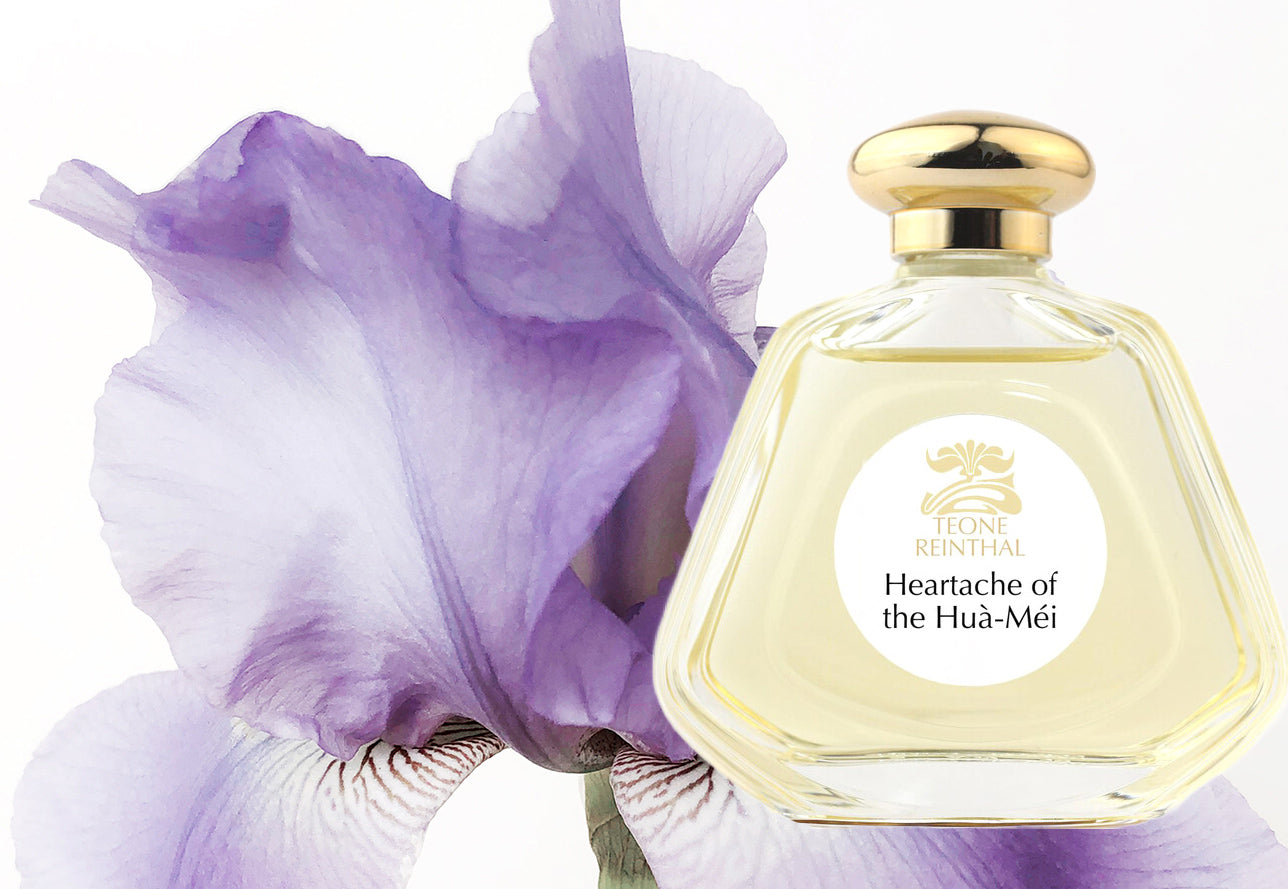
Iris: The Aristocrat Who Made Perfumers Wait Years to Hear Her Speak
Of all the flowers perfumery has ever tried to capture, only one has ever made the perfumer wait for it. Not weeks. Not a single harvest season. Years - sometimes more than a decade - before the plant is finally ready to give up its scent at all.
That flower is the iris. And its story is less a botanical footnote than a lesson in patience.
Why Orris Root Takes Years to Reach a Perfume Bottle
Here is the strange truth about iris: the flower itself gives almost nothing to the perfumer. It has a scent, but not one that can be captured - no method yet devised will pull a usable extract from the bloom.
What perfumers actually prize is hidden underground, in the rhizome. This thick, root-like stem must be dug up, washed, peeled, and then left to dry and age for three to five years before it develops any fragrance worth the name. During that long wait, the compounds responsible for iris's scent - the irones - slowly form through oxidation. There is no shortcut. There is no accelerating it. The root simply has to sit in the dark and become itself.
Only then can it be distilled.
Two species dominate: Iris pallida, grown chiefly in Tuscany, and Iris germanica, cultivated in Morocco and elsewhere. Both are handled the same way, and both demand the same patience.
It is worth pausing on what this means for the person who grows it. Somewhere in a field outside Florence, a farmer plants a rhizome knowing that neither they nor perhaps even their children will see the return on it for the better part of a decade. Iris does not reward impatience. It has never once been in a hurry to be understood.
Why Iris Is One of the Most Expensive Materials in Perfumery
The arithmetic is brutal. Commonly cited figures in the industry suggest that roughly 500 kilograms of dried root yields around one kilogram of orris butter - the waxy, concentrated material that goes into a perfumer's organ. Top-quality orris butter has been reported at figures approaching or exceeding $40,000 per kilogram, placing it in the same rarefied company as fine oud and natural ambergris.
Add the years of drying to the yield, and iris becomes something close to a luxury good before it has been blended into anything at all. This is why so many houses reach for synthetic ionones instead - reliable, affordable, consistent, and a very long way from the real thing.
The Aristocrat's Flower: Iris and the French Court
Iris carried an air of nobility long before it reached a perfume bottle.
Its name comes from the Greek goddess of the rainbow, a nod to the extraordinary range of colours across the roughly three hundred species in the genus. Its stylised form is widely believed to be the origin of the fleur-de-lis, the emblem adopted by French monarchs as a symbol of purity and sovereignty - though the attribution has been argued over by heraldists for centuries, and the name itself points to the lily.
Catherine de' Medici, who brought her Florentine perfumer with her to the French court, is said to have favoured iris-scented powders. Whether or not the anecdote survives close scrutiny, the association stuck. Powder rooms, court dress, gloved hands, old-world elegance - iris has never quite escaped any of it. To wear iris is, in a strange sense, to wear a small piece of court history.
What Does Iris Smell Like in Perfume?
Describing iris to someone who has never smelled it is notoriously difficult, which is why perfumers reach for texture rather than for other flowers.
It is usually called powdery - but not in the sense of a nursery or a cosmetics counter. Something cooler and more mineral than that. Closer to suede. Closer to chalk, or to fine violet leaf, or to the inside of an old leather glove.
Beneath the surface there is a faint carrot-like, earthy undertone - a reminder that this is, after all, a root and not a bloom. Some noses read a buttery quality. Others find something almost bread-like.
What iris rarely does is announce itself. It tends to sit at the edge of a composition, adding weight and a kind of hushed elegance rather than demanding centre stage. It is the material that makes everything around it seem better made.
Iris and Oud: Two Kinds of Patience
For anyone who has grown up around fragrance in the Gulf, there is a useful comparison to be drawn here - because iris and oud are, in a sense, mirror images of one another.
Both are among the most expensive raw materials on earth. Both are the product of time rather than of harvest: oud forms only when agarwood is wounded and the tree responds, slowly, over years; iris forms only when the root is cut from the ground and left to age, slowly, over years. Neither can be rushed. Both are worth more than their weight in most things.
But they resolve that patience in opposite directions.
Oud arrives. It fills a room, it announces the wearer before they have finished entering, it is generous and unmistakable and utterly certain of itself. Iris withdraws. It is felt at close range, at the wrist, in the space of a handshake. Where oud is a declaration, iris is a confidence.
There is no hierarchy here - only two different answers to the same question about how a person wants to be remembered. Many of our customers in the UAE wear both, and choose between them the way one chooses between speaking and listening.
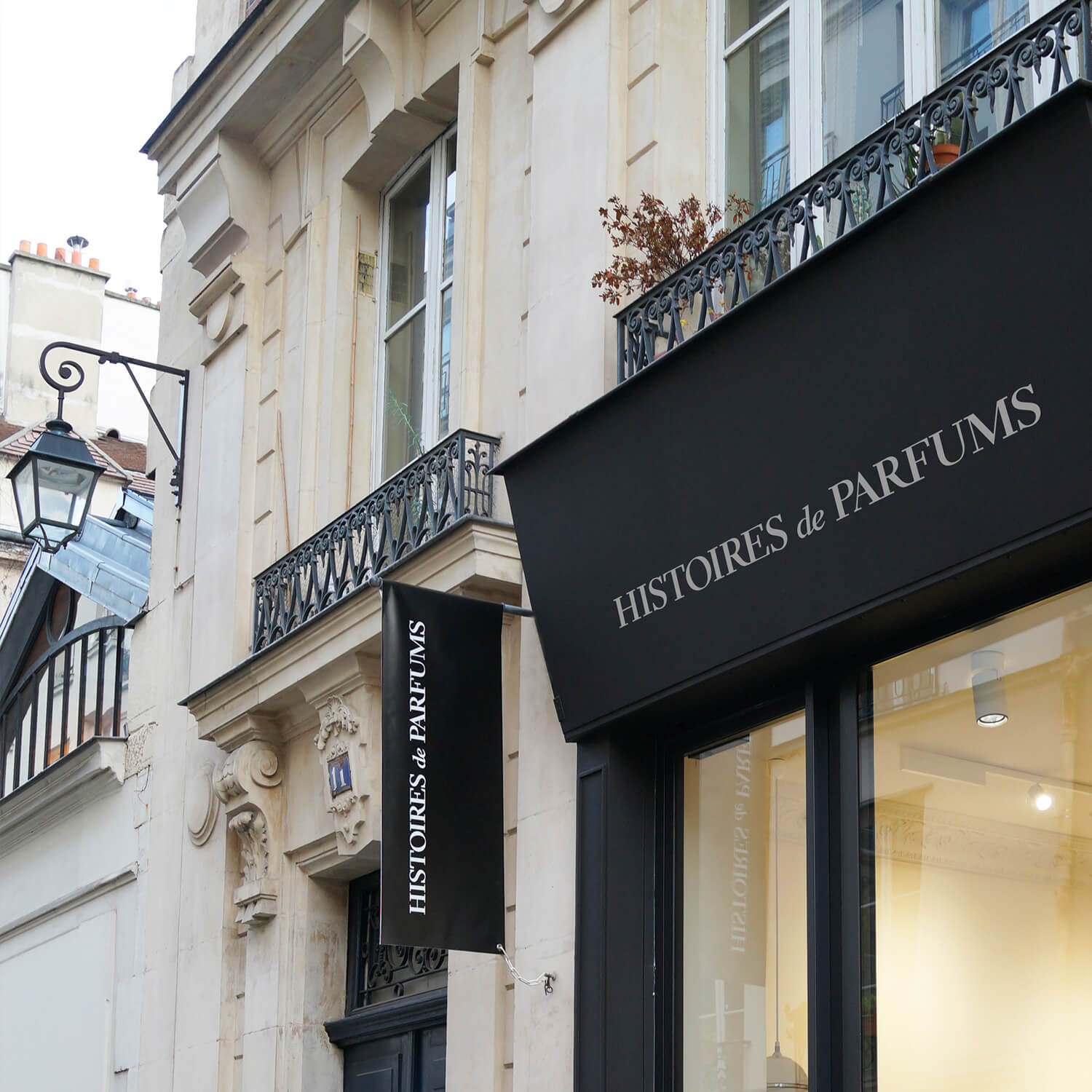
Where to Find Iris in the Histoires de Parfums Collection
1889 Moulin Rouge - the iris scent in our library
If you want to understand what iris does inside a real composition, this is the bottle. Classified floral powdery, 1889 Moulin Rouge places Iris in its base, alongside patchouli, musk and a suggestion of fur.
The story is set backstage at the cabaret after the curtain falls - mirrors, laughter, the smell of iris powder and lipstick drifting out to the street. Tangerine, prune and cinnamon open it; absinthe and Rose of Damascus carry the middle; and then iris arrives underneath everything, doing exactly what iris does - turning a loud, sequinned, theatrical scent into something with skin underneath it.
It is the clearest demonstration in the collection of why perfumers wait five years for this material.
7753 - the powdery neighbour
7753 (Unexpected Mona) contains no iris, but it lives in the same register. Heliotrope brings the soft, faintly almond powderiness that iris lovers tend to gravitate towards, set against tuberose and Barbary fig, with vetiver, sandalwood and oakmoss holding the base.
Named for the dimensions in millimetres of the Mona Lisa, it is bright where 1889 is nocturnal - a good next step if you like the powdered texture but want it in daylight.
1826 - the violet cousin
Violet and iris are chemical relatives; both owe much of their character to the ionone family. 1826, written for the Empress Eugénie de Montijo, sets violet in its heart against cinnamon and ginger, then lands on patchouli, amber, incense and vanilla. If the powdery-aristocratic idea appeals but you want warmth rather than coolness, start here.
Fidelis, pink gold - the counterpoint
Included deliberately as the opposite argument. Fidelis is rose absolute strengthened by Laotian oud, with saffron, cumin, cardamom and Guatemalan coffee. It is our most-reviewed fragrance in this market, and one customer described it simply as the smell of Dubai.
Wear 1889 and Fidelis on opposite wrists and you will understand the difference between the two kinds of patience described above better than any article can explain it.
Why a Material This Patient Belongs in a Story-Driven House
It is not hard to see why a material this slow, this quietly aristocratic, would find a natural home in a brand built entirely on storytelling.
At Histoires de Parfums, every fragrance is written as a chapter - a person, an era, a question the perfumer wanted to sit with. Iris, a material that takes years just to be ready to speak, belongs to that philosophy in a way few other ingredients could.
It is not a flower for fast fashion. It is a flower for a library.
How to Start with Iris
Iris rewards a slow introduction, much as it rewards a patient harvest. Buying a full bottle of a powdery fragrance you have never worn is the surest way to misjudge it - the material behaves very differently on different skin, and it needs a few hours to show what it is doing.
Start with individual samples, or with a 15 ml size, and give it a full day. Every full-size purchase ships with complimentary samples, and delivery across the UAE is free on orders over AED 500.
When you are ready to go further, browse the full fragrance collection or the Timeless Classics, where 1889 Moulin Rouge sits alongside the rest of our most literary chapters.
Frequently Asked Questions
What does iris smell like in perfume?
Cool, dry and powdery - closer to suede, chalk or violet leaf than to a floral bouquet. There is a faint earthy, carrot-like undertone beneath it, and some people detect something buttery or bread-like. It is a quiet material that adds texture and weight rather than dominating a composition.
Why is orris root so expensive?
Two reasons compound each other. The rhizome must be dried and aged for three to five years before it develops fragrance at all, and the yield is tiny - roughly 500 kg of dried root produces around 1 kg of orris butter. Reported prices for high-quality material approach or exceed $40,000 per kilogram.
Is iris the same as orris?
Effectively, yes - "orris" is the term used for the dried rhizome of the iris plant once it has been prepared for perfumery. The perfume ingredient comes from the root, never from the flower.
Which Histoires de Parfums fragrance contains iris?
1889 Moulin Rouge lists Iris among its base notes and is classified as floral powdery. For related powdery and violet-adjacent profiles, 7753 and 1826 are the closest neighbours in the collection.
Is iris a feminine note?
No. Iris is genderless in the hands of a good perfumer - it appears in some of the most masculine leathers and woods ever composed, and in some of the softest florals. What varies is what it is placed beside.

Laisser un commentaire
Ce site est protégé par hCaptcha, et la Politique de confidentialité et les Conditions de service de hCaptcha s’appliquent.